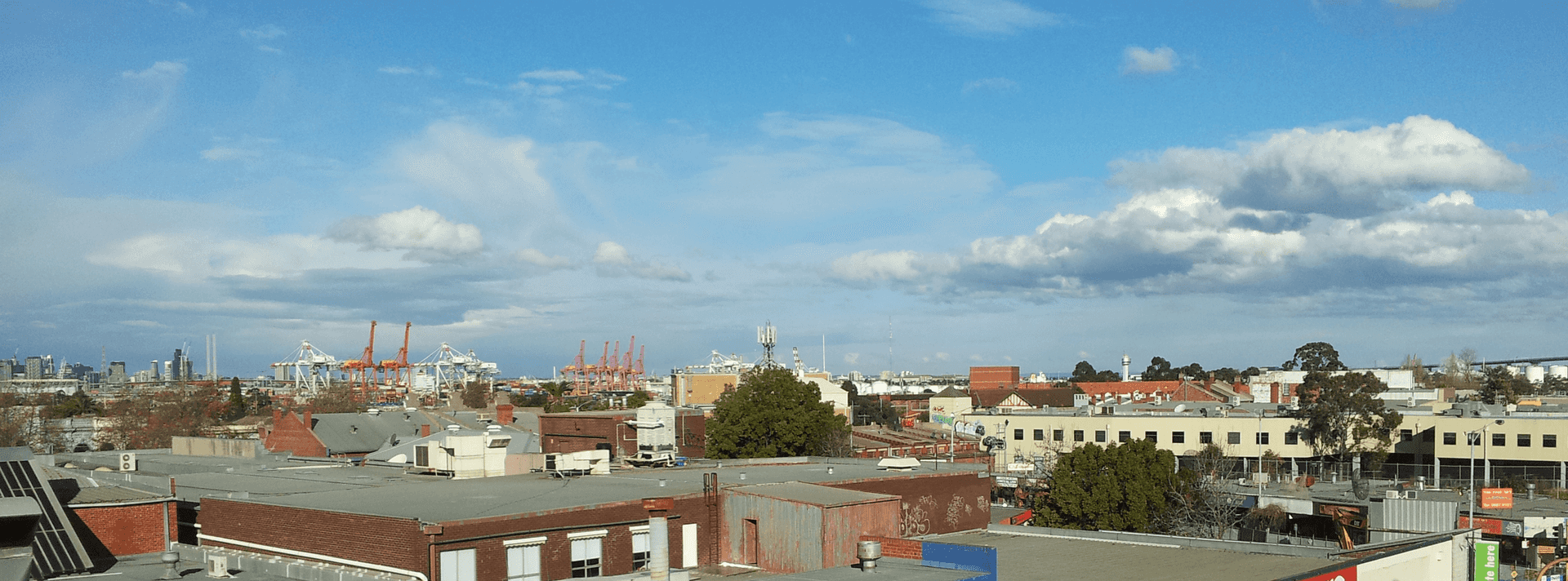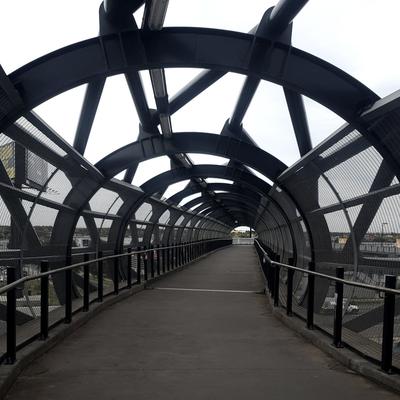
Buyers agent for Williams Landing VIC3027
Your complete Williams Landing property guide
Your trusted guide to finding the perfect property in Williams Landing.
Book your free consultation
Trish Moore B.Bus (Acc) FCA
Principal Buyers Agent
Estate Agent Licence
VIC 087665L

Loading map...
What's it like living in Williams Landing?
Williams Landing is Melbourne's west reinvented, a suburb that emerged not from farmland or coastal scrub, but from the runways of RAAF Base Laverton. The main streets still follow the alignment of those old runways, giving the neighbourhood an oddly geometric precision that distinguishes it from the winding layouts of older suburbs. Drive down Aviation Road or Overton Road and you're tracing paths where military aircraft once taxied. It's a masterplanned community in the purest sense, developed by Cedar Woods from 2008 onwards on 275 hectares of former airfield, and it wears that intentionality openly.
The 9,400 residents here skew young and professional. The predominant age bracket is 30 to 39, households are overwhelmingly couples with children, and nearly half the workforce holds university qualifications. This isn't accidental. Williams Landing Melbourne was designed as a transit-oriented development, a term that translates to houses and apartments clustered around a train station and town centre, with employment built in rather than bolted on later. The result is a suburb that attracts people who value proximity over heritage, convenience over character. First-home buyers feature heavily, drawn by newer homes at more accessible entry points than the established eastern suburbs, and by school zones that include newer facilities like Dohertys Creek P-9 College.
Daily life revolves around the town centre and the train station. Williams Landing Shopping Centre anchors the retail offering, with a Woolworths, specialty shops, medical centre, childcare, and a gym. It's functional rather than destination shopping, the kind of place you walk to for groceries on a weeknight. The dining precinct offers a spread of cuisines reflecting the suburb's multicultural mix, though residents looking for a broader hospitality scene tend to head into Werribee or across to Point Cook. Weekend routines often include the Williams Landing Boulevard Reserve, a large sporting precinct with pavilion, basketball courts, and a well-equipped playground. The 24-kilometre Federation Trail runs through the suburb, popular with cyclists commuting to the station or riding recreationally along the network of paths that connect Williams Landing to surrounding areas.
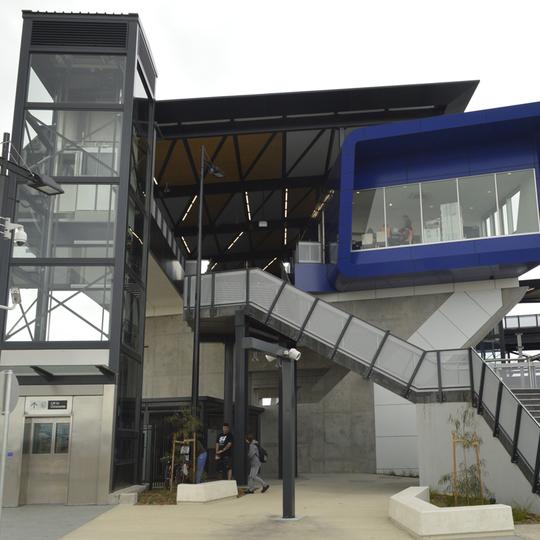
Transport is the suburb's headline feature. Williams Landing Station opened in 2013 on the Werribee line, delivering a 35 to 40-minute trip to the CBD and placing the suburb within genuine commuting distance for city workers. The station includes bike cages, though demand exceeds supply, with waiting lists running into the hundreds. Bus routes service the suburb, and the Princes Freeway is directly accessible via Aviation Road, offering quick connections to Geelong and the broader western corridor. For people working locally, the town centre is becoming an employment node in its own right. Target Australia relocated its 850-employee headquarters to an eight-level office building next to the train station in 2018, a significant vote of confidence in the western growth corridor and a tangible demonstration that white-collar jobs are moving west.
Green space exists here, but it's engineered rather than natural. The suburb was designed with 16 parks covering a third of the total area, offering open lawns, playgrounds, and sporting facilities. Ashcroft Park, Kingsbridge Boulevard Playground, and the Altair Street Wetlands provide recreation and some biodiversity, but this is not a suburb where you stumble across established eucalypts or creek corridors that predate development. The trees are young, planted as part of the masterplan, and the landscape reads as orderly and new. For families, that translates to safe, well-maintained parks with modern equipment. For those seeking the leafier aesthetics of older suburbs, Williams Landing can feel sparse and exposed.
Schooling is a point of contention. Despite the growing population, there are no government primary or secondary schools located within Williams Landing itself. Families rely on neighbouring suburbs for education, with school zones determining which facilities children attend. The absence of a local school has been a consistent complaint from residents for over a decade, though the suburb is now largely built out, leaving little land available for a future school site. Childcare is well-catered for, with multiple centres including a 106-seat facility within the shopping centre, but the morning school run often involves driving in the opposite direction to the train station, complicating logistics for working parents.
From an investment standpoint, Williams Landing presents a case study in planned urban growth. Designated by the Victorian Government as a Priority Development Zone and identified in Plan Melbourne as a major activity centre, the suburb sits within the City of Wyndham, one of Australia's fastest-growing municipalities. Economic research has projected potential for up to 29,000 white-collar jobs in the broader Williams Landing area by 2031, with the town centre and adjacent East Werribee Employment Precinct driving demand. The population grew 42 per cent between 2016 and 2021, and while that pace will moderate as the development nears completion around 2035, the infrastructure and employment fundamentals support sustained demand. Rental yields are modest but stable, with strong interest from tenants working in the surrounding industrial and commercial sectors. The suburb appeals to investors seeking newer stock with lower maintenance and access to growth-area demographics.
The trade-offs are visible and worth acknowledging. Williams Landing lacks the mature trees, established gardens, and neighbourhood quirks that come with age. The architecture is uniform and contemporary, which reads as either clean and modern or generic and soulless depending on your perspective. Some residents report increased property crime in recent years, particularly break-in attempts, a concern shared across many growth-area suburbs. The proximity to RAAF Base Williams at Laverton, while historically significant, means occasional reminders of the military presence. And for all the planning that's gone into the development, the absence of a local school remains a genuine inconvenience for families. But for buyers and investors willing to prioritise access, amenity, and growth potential over established character, Williams Landing delivers a functional, well-connected suburb where the infrastructure arrived before the houses, not decades later.
The information provided is for general information purposes only and does not constitute legal, financial, or professional advice. While care has been taken to ensure accuracy, the information may not be complete, current, or applicable to your specific situation. You should always do your own research and, where appropriate, seek advice from a qualified professional before making any decisions based on this information.
Looking to buy property in Williams Landing?
Let's talk about what you're looking for and how we can help. No obligation, no pressure, just an honest conversation about your property goals.
The Williams Landing property market
Data from Q2 2025 · Victorian Property Sales Report
These charts show median property prices, sales activity, and investment metrics for Williams Landing. The median price represents the middle value of all sales—half sold for more, half for less—giving a more accurate picture than averages, which can be skewed by unusually high or low sales.
Price History (2013-2024)
Annual median prices showing long-term capital growth trends. Use this to assess how the suburb has performed through different market cycles.
Investment Performance
CAGR (Compound Annual Growth Rate) shows average yearly growth accounting for compounding—a key metric for comparing investment returns.
Q2 2025 Sales Volume
Number of properties sold this quarter. Higher volumes indicate more market activity and reliable pricing data.
Recent Price Changes
Quarterly shows change from last quarter; Annual (YoY) compares to the same quarter last year, smoothing seasonal effects.
Data Sources: Property sales data from Victorian Property Sales Report (Department of Transport and Planning). Rental data from Homes Victoria Rental Report. All data licensed under Creative Commons Attribution 4.0.
Demographics of Williams Landing
Based on 2021 Australian Census
Age Distribution
Housing Tenure
Income & Housing Costs
| Median Personal Income (weekly) | $1,006 |
| Median Family Income (weekly) | $2,592 |
| Median Rent (weekly) | $420 |
| Median Mortgage (monthly) | $2,167 |
Top Occupations
Transport to Work
Languages Spoken at Home
| English only | 32% |
| Mandarin | 9.8% |
| Hindi | 7.1% |
| Punjabi | 6% |
| Telugu | 4.2% |
| Gujarati | 3.4% |
Country of Birth
| Australia | 36.6% |
| India | 21.5% |
| China | 6.6% |
| New Zealand | 3.5% |
| Philippines | 2.4% |
| Indonesia | 2.3% |
Dwellings
| Total Dwellings | 3,186 |
| Occupied Dwellings | 2,823 |
| Unoccupied Dwellings | 229 |
Data Source: Australian Bureau of Statistics, 2021 Census of Population and Housing. View full census data →
Places of interest in Williams Landing
- Williams Landing Town Centre (shopping, dining, offices)
- Williams Landing Railway Station (opened 2013, regional transport hub)
- Aviation heritage features (street names, monuments honoring RAAF history)
- Wyndham Waters Estate (recreation centre with gym, outdoor pool, tennis, steam room, sauna)
- Community parks and environmental reserves
- Modern mixed-use development on former RAAF Base Laverton airfield site
Nearby attractions
- Werribee Park Precinct (world-class attractions: Zoo, Mansion, Rose Garden, Equestrian Centre all within easy reach)
- RAAF Museum at Point Cook (Australia's largest military aviation collection, birthplace of RAAF)
- Western Treatment Plant (birdwatching paradise with tens of thousands of birds)
- Werribee River Trail (extensive walking and cycling trail system)
- Cheetham Wetlands (scenic wetlands with city skyline views)
Buyers agent Williams Landing VIC3027
How much does a buyer's advocate cost in Williams Landing?
Buyer's advocate fees in Williams Landing are typically structured as a percentage of the purchase price or a fixed fee depending on the service level. We offer transparent pricing with no hidden costs, and our negotiation expertise often saves clients far more than our fee through better purchase prices and avoiding problematic properties.
Can you help with property inspections in Williams Landing?
Yes, we attend all property inspections in Williams Landing on your behalf or with you. We know what to look for, what questions to ask, and which issues matter most. We coordinate building and pest inspections with trusted professionals and help you interpret the results to make informed decisions about proceeding with a purchase.
What due diligence do you conduct on properties in Williams Landing?
Our due diligence in Williams Landing includes title searches, planning checks, building and pest inspections, comparable sales analysis, and neighbourhood research. We investigate zoning, easements, overlays, and any factors that might affect property value or future use. This thorough approach helps you avoid properties with hidden problems or limited potential.
Can you help with renovator properties or fixer-uppers in Williams Landing?
Yes, we can identify renovation opportunities in Williams Landing and provide guidance on renovation costs and potential. While we're not builders, we understand property potential and can help you assess whether a fixer-upper makes financial sense. We can also connect you with trusted trade professionals for renovation quotes and advice.
What questions should I ask when viewing properties in Williams Landing?
We handle property viewings in Williams Landing and know exactly what to ask about building condition, recent renovations, council approvals, neighbourhood issues, and seller circumstances. Our experience means we ask the right questions that reveal information affecting property value and suitability. You benefit from our systematic approach to property evaluation.