Buyers agent for Tottenham VIC3012
Your complete Tottenham property guide
Your trusted guide to finding the perfect property in Tottenham.
Book your free consultation
Trish Moore B.Bus (Acc) FCA
Principal Buyers Agent
Estate Agent Licence
VIC 087665L

Loading map...
What's it like living in Tottenham?
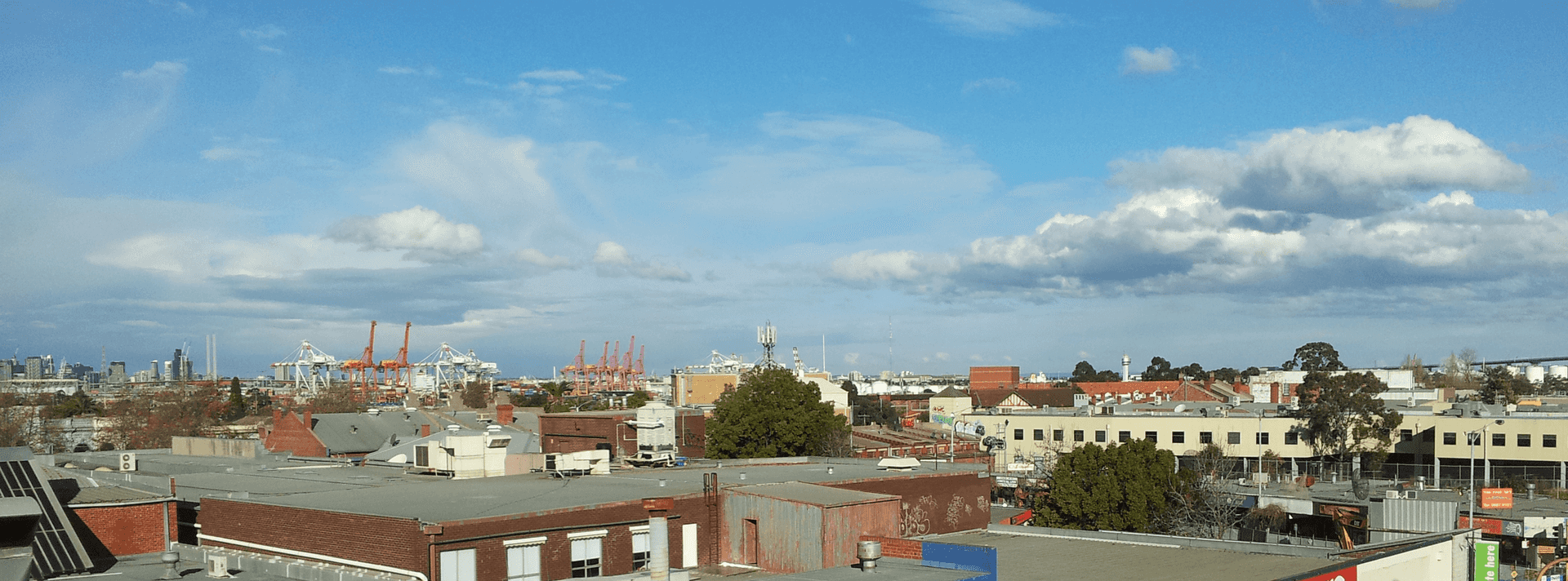
Nine kilometres west of Melbourne's CBD, Tottenham exists primarily on paper and in industrial reality rather than residential community. The 2021 census recorded a population of three people across 2.1 square kilometres, making this perhaps Melbourne's most unusual suburb profile to write. Bounded by Sunshine Road to the north, Sredna Street and Paramount Road to the east, Geelong Road to the south, and the Newport-Sunshine railway line to the west, Tottenham functions overwhelmingly as industrial district rather than residential suburb. Yet the story of Tottenham reveals how Melbourne's inner west evolved, why certain areas developed while others stagnated, and what happens when railway infrastructure drives land use more powerfully than residential demand.
The industrial character stems from Tottenham Station's 1891 opening, named after the working-class suburb north of London. Railway marshalling and gravitation yards established in the 1910s expanded substantially when the western goods line was constructed in the late 1920s. A single-platform station built in 1927 initially serviced White City, a tin-hare dog track that operated briefly before the sport was banned in 1929. The unused platform sat dormant until 1940, when World War Two transformed Tottenham into major industrial hub servicing government stores, a Royal Australian Air Force depot to the north, and Elders' and Australian Estates' wool stores alongside Olympic Cables to the south. This wartime industrial acceleration cemented Tottenham's character for decades.
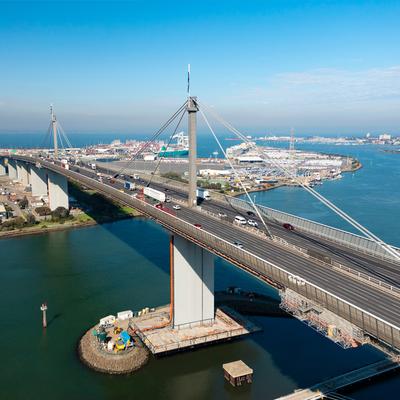
Today, the Olex Cable manufacturing facility represents one of many industrial businesses occupying this flat, bare landscape sitting on the Victorian Volcanic Plain grasslands. Warehouses, factories, and commercial spaces dominate, creating a logistics and business hub serving Melbourne's western industrial corridor. The West Gate Freeway and Footscray Road provide excellent transport connections for freight and commercial traffic, reinforcing Tottenham's role in metropolitan supply chains rather than residential communities. Apart from railway and RAAF housing built during wartime periods, residential development never gained momentum here despite proximity to the CBD.
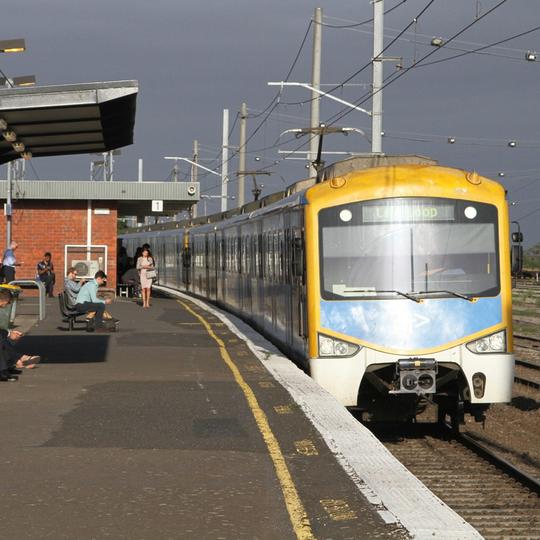
The fascinating aspect involves Tottenham Station's location at the convergent point of West Footscray, Tottenham, and Braybrook borders, creating geographic complexity where residents of neighbouring suburbs use the station while technically not living in Tottenham proper. The station serves the Sunbury railway line, providing Zone 1 access to the CBD in roughly 20 minutes when trains run express. This transport infrastructure theoretically supports residential development, yet industrial zoning and established commercial uses prevent meaningful housing construction. The challenge, as one resident review noted, is that there simply aren't houses in this suburb because it's difficult to live here amidst industrial operations.
For those few residential properties that exist, the location offers compelling attributes: ten kilometres from the city with train station access, bus routes serving the area, and proximity to neighbouring suburbs' amenities including Footscray, Yarraville, West Footscray, Braybrook, and Maidstone. Rental yields reportedly reach 4.39 percent for houses and 4.27 percent for units, reflecting the scarcity premium and investor interest in industrial-adjacent property. The affordability, transport access, and proximity to amenities create theoretical appeal, except for the fundamental reality that Tottenham Melbourne functions as industrial zone rather than residential community.
The West Footscray-Tottenham statistical area, which combines both suburbs for census purposes, shows considerably more population and residential activity, with approximately 8,318 employed residents as of June 2025. The unemployment rate of 3.6 percent runs well below Greater Melbourne's 4.6 percent, with workforce participation at healthy 69.8 percent. Key industries include healthcare and social assistance, education and training, and professional and technical services, with notable specialization in public administration and safety employing 8.6 percent of the workforce. This employment data reflects West Footscray's residential population rather than Tottenham proper, illustrating how statistical aggregation obscures individual suburb realities.
The development pattern shows approximately 53 dwelling approvals annually over recent years, totaling 267 homes across five financial years from FY21 to FY25. However, the ratio of new residents to new homes built increased to 9.4 people per dwelling over the past two years, suggesting growing popularity and potential undersupply in the broader West Footscray-Tottenham area. Commercial development approvals totaled $53.5 million in FY26, indicating substantial business investment. Yet overall development activity runs 63 percent below Greater Melbourne's regional average per person, reflecting the constrained new construction that reinforces demand for existing dwellings in neighbouring residential suburbs.
From an investment perspective, Tottenham represents the peculiar case of industrial-zoned inner suburb where residential property scarcity creates both opportunity and limitation. The handful of properties that exist enjoy exceptional proximity to CBD, train access, and industrial employment, potentially attracting buyers seeking unconventional opportunities or investors targeting high yields from limited stock. Yet the industrial operations, limited amenity, absence of schools or parks within suburb boundaries, and tiny population base mean living in Tottenham requires accepting isolation from residential community life that defines most suburbs.
The historical footnotes add character: Tottenham Central Post Office opened in 1947, Tottenham East Post Office operated from 1935 to 1973, and a Tottenham RAAF Post Office served from 1947 to 1957, all reflecting wartime and post-war industrial activity rather than residential growth. The suburb's development trajectory diverged sharply from neighbouring areas, with industrial uses preventing the residential infill and gentrification transforming West Footscray, Maidstone, and Braybrook. This frozen-in-time quality creates both historical interest and practical limitations for anyone considering moving to Tottenham.
What ultimately defines Tottenham is function over form, industry over community, strategic location over residential amenity. The suburb exists primarily to serve Melbourne's industrial and logistics needs, providing well-connected land for manufacturing, warehousing, and commercial operations. The three residents counted in the 2021 census likely represent caretakers, business operators living on-site, or statistical anomalies rather than genuine residential community. For buyers seeking Tottenham property, the opportunity involves industrial-adjacent investment plays or unconventional residential situations rather than typical suburban living. The suburb's story illustrates how transport infrastructure, wartime demands, and zoning decisions shape land use more powerfully than residential market forces, creating pockets within inner Melbourne that remain fundamentally different from their neighbours despite sharing postcodes and proximity to the CBD.
The information provided is for general information purposes only and does not constitute legal, financial, or professional advice. While care has been taken to ensure accuracy, the information may not be complete, current, or applicable to your specific situation. You should always do your own research and, where appropriate, seek advice from a qualified professional before making any decisions based on this information.
Looking to buy property in Tottenham?
Let's talk about what you're looking for and how we can help. No obligation, no pressure, just an honest conversation about your property goals.
The Tottenham property market
Data from Q2 2025 · Victorian Property Sales Report
These charts show median property prices, sales activity, and investment metrics for Tottenham. The median price represents the middle value of all sales—half sold for more, half for less—giving a more accurate picture than averages, which can be skewed by unusually high or low sales.
Data Sources: Property sales data from Victorian Property Sales Report (Department of Transport and Planning). Rental data from Homes Victoria Rental Report. All data licensed under Creative Commons Attribution 4.0.
Demographics of Tottenham
Based on 2021 Australian Census
Age Distribution
Housing Tenure
Income & Housing Costs
| Median Personal Income (weekly) | $0 |
| Median Family Income (weekly) | $0 |
| Median Rent (weekly) | $0 |
| Median Mortgage (monthly) | $0 |
Top Occupations
Transport to Work
Languages Spoken at Home
| English only | % |
Country of Birth
Dwellings
| Total Dwellings | |
| Occupied Dwellings | |
| Unoccupied Dwellings |
Data Source: Australian Bureau of Statistics, 2021 Census of Population and Housing. View full census data →
Places of interest in Tottenham
- Tottenham Railway Station
- Local Parks and Reserves
- Community Recreation Areas
Nearby attractions
- Highpoint Shopping Centre (4th largest in Australia, 500+ stores)
- Maribyrnong River Trail (extensive walking and cycling paths)
- Footscray Market (multicultural fresh food market)
- Melbourne's Living Museum of the West
- Footscray Park (Edwardian park, event venue)

Buyers agent Tottenham VIC3012
Will you represent me at auctions in Tottenham?
Yes, we provide professional auction bidding services in Tottenham. We research the property thoroughly, establish a bidding strategy, and represent your interests on auction day. Our auction experience means we understand buyer behaviour and know how to position bids effectively to secure properties at fair prices.
What areas do your buyer's advocate services cover around Tottenham?
We specialise in Tottenham and surrounding western suburbs of Melbourne. Our deep knowledge of the local area means we understand neighbourhood characteristics, market dynamics, and property values across the region. This local expertise is crucial for identifying the right property in the right location for your needs.
Will you help me understand the contract of sale for properties in Tottenham?
Yes, we review all contracts of sale for properties in Tottenham and explain key terms, conditions, and potential concerns. While we're not lawyers, our experience means we know what to look for and when you should seek additional legal advice. We ensure you understand exactly what you're agreeing to before making any commitment.
How do you stay updated on the Tottenham property market?
We monitor Tottenham sales data, attend inspections and auctions, maintain relationships with local agents, and track market trends continuously. This active market engagement means we know current pricing, competition levels, and emerging opportunities. Our insights are based on real-time market activity, not outdated research or assumptions.
What questions should I ask when viewing properties in Tottenham?
We handle property viewings in Tottenham and know exactly what to ask about building condition, recent renovations, council approvals, neighbourhood issues, and seller circumstances. Our experience means we ask the right questions that reveal information affecting property value and suitability. You benefit from our systematic approach to property evaluation.