Buyers agent for Point Cook VIC3030
Your complete Point Cook property guide
Your trusted guide to finding the perfect property in Point Cook.
Book your free consultation
Trish Moore B.Bus (Acc) FCA
Principal Buyers Agent
Estate Agent Licence
VIC 087665L

Loading map...
What's it like living in Point Cook?
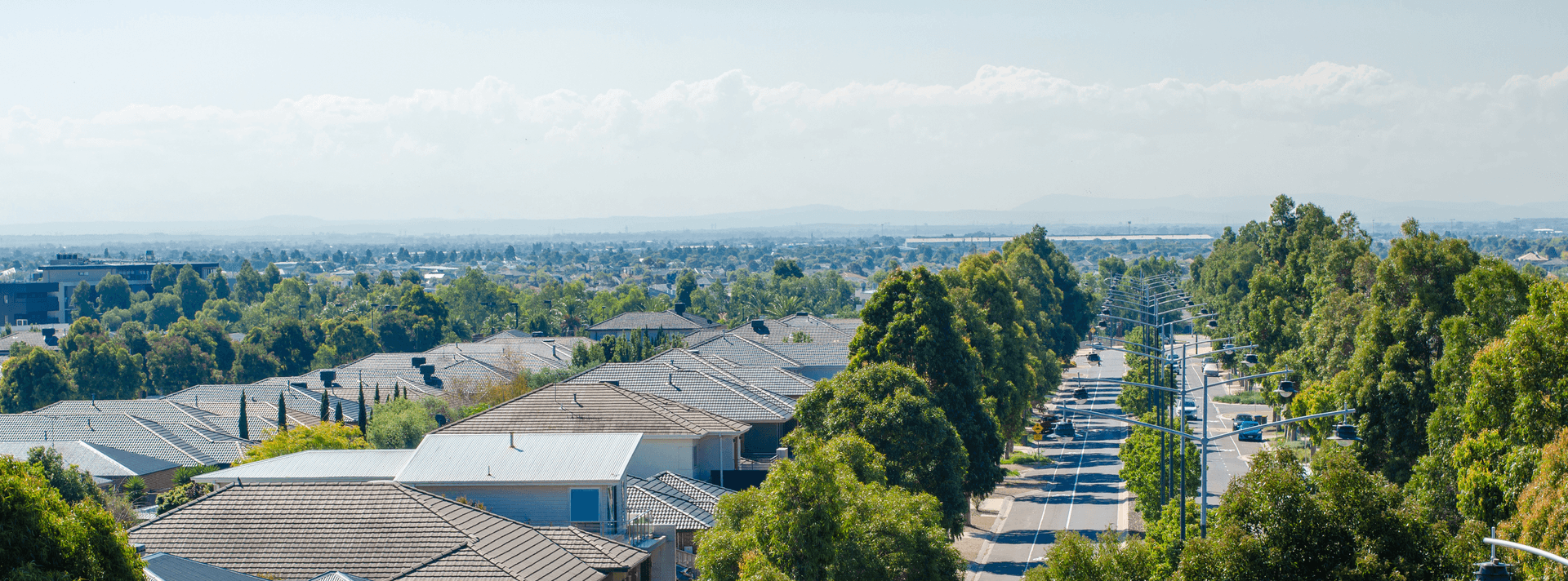
Point Cook sits 22 kilometres southwest of Melbourne's CBD within the City of Wyndham, and it holds the distinction of being Australia's most populated suburb with 66,781 residents recorded at the 2021 census. This is a suburb that barely existed before the late 1990s. In 1996, Point Cook was essentially a rural community with RAAF Base Point Cook and a population of approximately 580 people, most of whom lived on the base itself. By 2001, the population reached 1,737, by 2006 it was 14,162, by 2011 it hit 32,413, by 2016 it reached 49,929, and by 2021 it had climbed to 66,781. This represents one of the most dramatic suburban transformations in Australian history, a blank canvas developed into a sprawling residential zone across 38.9 square kilometres in barely two decades.
Point Cook was named in 1836 after John M. Cooke, mate on Captain Hobson's vessel Rattlesnake which charted Port Phillip Bay. The area served as pastoral grazing land from 1849, became part of the Chirnside family's extensive holdings in 1853, and hosted the famous Point Cook Homestead built in 1857 with 25 rooms. The Chirnsides introduced deer and foxes for hunting in the 1850s, hosted Melbourne and Geelong hunt clubs, and bred horses on property featuring three racetracks. In 1912, the Federal Government purchased land to establish the Australian Flying Corps, which became RAAF Base Point Cook after the First World War. The base opened in March 1913, operated as a flying training school until 1992, and is considered the birthplace and spiritual home of the RAAF. Today the base houses the RAAF Museum, one of the world's most renowned air force museums with significant aircraft collections, though accessing it requires navigating security procedures including photographic identification and vehicle registration, and there is no public transport to the base itself.
The demographic profile establishes Point Cook as the most multicultural suburb in Australia according to 2021 census data. Residents hail from 86 countries with at least 20 people from each, approximately 70 per cent of residents have both parents born overseas, and the suburb has the largest number of different languages spoken at home in the country. Only 54.4 per cent of people were born in Australia, with the most common other countries being India at 5.7 per cent, China at 4.4 per cent, England at 3.9 per cent, New Zealand at 3.3 per cent, and Philippines, Malaysia, Indonesia, South Africa, Vietnam, and Singapore all represented. Only 58.2 per cent speak English at home, with Mandarin at 5.6 per cent, Hindi at 2.9 per cent, Cantonese at 2.4 per cent, Indonesian, Vietnamese, Italian, and Arabic all commonly spoken. The median age is 33 years, children under 15 make up 28 per cent of the population compared to the national average of 18 per cent, and residents aged 65 and over account for only 4.6 per cent. The predominant age group is 30-39, and 63.4 per cent of households are couples with children, making this overwhelmingly a young family suburb.
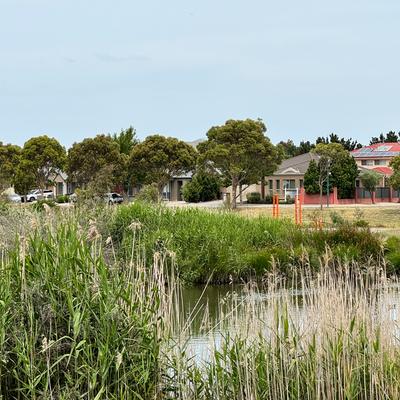
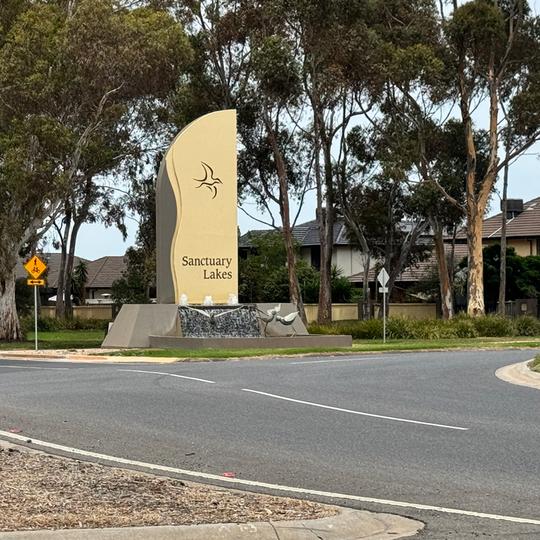
Daily life revolves around Point Cook Town Centre at the corner of Dunnings Road and Boardwalk Boulevard, opened in stages from August 2008 through November 2009. The centre offers approximately 135 specialty shops including Coles, Aldi, Target, Woolworths, a food court seating over 400 people, Victoria's largest Dan Murphy's store, and various cafes and restaurants. Point Cook hosts over 50 restaurants and cafes offering Italian, Indian, Malaysian, Chinese, Vietnamese, Korean, Thai, Japanese, Pakistani, Pan Asian, Spanish, American, and Mexican cuisine, reflecting the multicultural population. The smaller Sanctuary Lakes shopping centre serves the gated community with additional retail options. The suburb offers 97 parks covering 27.7 per cent of total area, one of the highest ratios in Melbourne's western suburbs, including Point Cook Coastal Park with wetlands forming part of the Cheetham and Altona Important Bird Area, offering walking trails, birdwatching, and bay views. Schools serve the growing population with Carranballac P-9 College, Point Cook P-9 College, Point Cook Senior College, South East P-9 School, and Catholic options including Lumen and Stella Maris primary schools and Emmanuel senior college.
Transport is the critical failing that dominates nearly every resident review. Point Cook has no train station within its boundaries. Williams Landing Station opened in 2013 just across the Princes Freeway, accessible via Palmers Road, and Hoppers Crossing Station serves residents on the northern edge, but much of Point Cook sits too far from either station for walkable access. Bus coverage is inadequate, with services too infrequent and routes that fail to reach all estates, making them unreliable as primary transport. This leaves Point Cook car-dependent, and the road infrastructure cannot handle the population. Peak hour traffic is described repeatedly as a nightmare, with essentially one route into the CBD via the Westgate Freeway, and a single car accident creating hours of gridlock with no alternative routes. Residents report leaving at 6am to reach Collingwood by 6:30am, but leaving at 7am transforms the same journey into crawling congestion. Local traffic within Point Cook during any time of day resembles peak hour, reflecting roads designed for rural patterns now servicing tens of thousands of vehicles.
From an investment perspective, Point Cook delivers moderate capital growth with decent rental yields in a context of established demand but infrastructure constraints. The median house price sits around 800,000 to 820,000 dollars, with units around 585,000 dollars. Rental yields are 3.56 per cent for houses with median weekly rents of 560 to 565 dollars, and 4.63 per cent for units with rents of 520 dollars. Properties sell within 37 to 50 days on average. House values increased 3.1 per cent over the past year, while unit values rose 8.5 per cent, though unit price growth still lags Melbourne averages. Owner-occupation sits at 65.5 per cent, with 51.9 per cent owned with mortgages and 15.3 per cent owned outright, indicating high mortgage stress potential given median monthly repayments of 2,115 dollars. The rental market comprises 30 per cent of properties, higher than typical family suburbs, and median weekly household income is 2,392 dollars.
Resident reviews reveal extraordinary polarization based on expectations, timing of arrival, and tolerance for infrastructure deficits. Long-term residents and owner-occupiers describe Point Cook as family-friendly with lovely community spirit, great schools, parks, walking tracks, and cafes, proximity to beaches at Werribee South and Altona or day trips to Geelong, safe neighbourhoods where you can walk any street at night without worry, multicultural vibrancy, and huge potential for growth. They emphasise that negatives like crime rates are exaggerated, that the pros easily outweigh the cons, and that Point Cook offers affordability and space impossible to achieve closer to the CBD.
The documented realities sit somewhere between these extremes but closer to infrastructure overwhelm. Point Cook's transformation from 580 people in 1996 to 66,781 in 2021 occurred faster than infrastructure could possibly accommodate. The Growth Areas Authority sold farmland for housing to fund infrastructure, creating more cars in a car-dependent suburb without solving the fundamental transport problem. Williams Landing Station opened in 2013 but serves only a fraction of Point Cook's sprawling estates. Bus networks upgraded in 2010 and 2015 remain inadequate for a population this size. The single freeway route via Westgate creates bottleneck vulnerability that no amount of planning can resolve without major rail investment directly serving Point Cook's core residential areas.
Crime statistics require context. Victoria Police data shows Point Cook has relatively low street crime, with residents reporting they can walk any street at night safely. Property crime including car break-ins and house burglaries occurs, particularly in newer estates with more rental properties, but characterizations of Point Cook as a high-crime suburb appear exaggerated compared to documented data. The perception of crime, driven by police helicopter activity and social media amplification, exceeds the statistical reality, though insurance companies clearly factor risk into premiums that increase upon moving to the area.
The cultural diversity represents both strength and challenge. Point Cook's status as Australia's most multicultural suburb creates vibrancy, diverse cuisine, and community for new migrants establishing Australian lives. But it also creates cultural adjustment challenges for Anglo-Australian families expecting homogenous neighbourhoods, and internet forums contain undercurrents of racial tension wrapped in complaints about integration and assimilation.
The trade-offs require honest assessment. Point Cook offers extraordinary park coverage at 27.7 per cent, modern housing on decent blocks, genuine multiculturalism creating global village atmosphere, affordability relative to inner suburbs, strong rental demand for investors, RAAF heritage and museum access, coastal park and wetlands for outdoor recreation, and proximity to both Melbourne and Geelong. But it delivers catastrophic transport infrastructure unable to serve the population, peak hour traffic that makes commuting by car a daily ordeal, inadequate public transport leaving residents car-dependent, roads congested at all hours, limited entertainment and dining compared to established suburbs, master-planned uniformity lacking architectural character, and a suburb that grew too fast for infrastructure to catch up. The suburb works for young families prioritising affordability and space over commute convenience, for new migrants seeking community in a multicultural environment where their language and culture are represented, for investors seeking rental yields in a high-demand growth corridor, and for residents willing to structure their lives around 6am departures or remote work arrangements that avoid peak hour entirely. It works less well for daily commuters to the CBD, for buyers expecting established infrastructure and transport options, for those seeking vibrant nightlife and entertainment, or for families requiring walkable access to train stations. What Point Cook represents is Australian suburban development at unsustainable velocity, delivering affordable housing for tens of thousands of families at the cost of transport infrastructure that cannot possibly serve them adequately.
The information provided is for general information purposes only and does not constitute legal, financial, or professional advice. While care has been taken to ensure accuracy, the information may not be complete, current, or applicable to your specific situation. You should always do your own research and, where appropriate, seek advice from a qualified professional before making any decisions based on this information.
Looking to buy property in Point Cook?
Let's talk about what you're looking for and how we can help. No obligation, no pressure, just an honest conversation about your property goals.
The Point Cook property market
Data from Q2 2025 · Victorian Property Sales Report
These charts show median property prices, sales activity, and investment metrics for Point Cook. The median price represents the middle value of all sales—half sold for more, half for less—giving a more accurate picture than averages, which can be skewed by unusually high or low sales.
Price History (2013-2024)
Annual median prices showing long-term capital growth trends. Use this to assess how the suburb has performed through different market cycles.
Investment Performance
CAGR (Compound Annual Growth Rate) shows average yearly growth accounting for compounding—a key metric for comparing investment returns.
Q2 2025 Sales Volume
Number of properties sold this quarter. Higher volumes indicate more market activity and reliable pricing data.
Recent Price Changes
Quarterly shows change from last quarter; Annual (YoY) compares to the same quarter last year, smoothing seasonal effects.
Data Sources: Property sales data from Victorian Property Sales Report (Department of Transport and Planning). Rental data from Homes Victoria Rental Report. All data licensed under Creative Commons Attribution 4.0.
Demographics of Point Cook
Based on 2021 Australian Census
Age Distribution
Housing Tenure
Income & Housing Costs
| Median Personal Income (weekly) | $969 |
| Median Family Income (weekly) | $2,468 |
| Median Rent (weekly) | $400 |
| Median Mortgage (monthly) | $2,115 |
Top Occupations
Transport to Work
Languages Spoken at Home
| English only | 44.3% |
| Mandarin | 8.9% |
| Hindi | 6.4% |
| Punjabi | 3% |
| Urdu | 2.2% |
| Telugu | 2% |
Country of Birth
| Australia | 43.9% |
| India | 14.9% |
| China | 6.4% |
| New Zealand | 3.7% |
| England | 2.2% |
| Philippines | 2.1% |
Dwellings
| Total Dwellings | 22,500 |
| Occupied Dwellings | 20,137 |
| Unoccupied Dwellings | 1,592 |
Data Source: Australian Bureau of Statistics, 2021 Census of Population and Housing. View full census data →
Schools in Point Cook
10 schools found
| School Name | Type | Sector | Year Range | ICSEA | Enrolments |
|---|---|---|---|---|---|
| Alamanda K-9 College | Combined | Government | Prep-9 | 1137 | 3,307 |
| Carranballac P-9 College | Combined | Government | Prep-9 | 1014 | 980 |
| Featherbrook P-9 College | Combined | Government | Prep-9 | 1084 | 1,221 |
| Homestead Senior Secondary College | Secondary | Government | 10-12 | 1065 | 421 |
| Point Cook Prep - Year 9 College | Combined | Government | Prep-9 | 1063 | 1,346 |
| Point Cook Senior Secondary College | Secondary | Government | 10-12 | 1026 | 765 |
| Saltwater P-9 College | Combined | Government | Prep-9 | 1075 | 2,099 |
| Lumen Christi School | Primary | Catholic | Prep-6 | 1095 | 675 |
| St Mary of the Cross Catholic Primary School | Primary | Catholic | Prep-6 | 1074 | 322 |
| Stella Maris Catholic Primary School | Primary | Catholic | Prep-6 | 1097 | 744 |
Data Source: Australian Curriculum, Assessment and Reporting Authority (ACARA), MySchool data. ICSEA (Index of Community Socio-Educational Advantage) represents the relative socio-educational advantage of students. The average ICSEA score is 1000.
Places of interest in Point Cook
- RAAF Museum (birthplace of Australian aviation, free entry, heritage aircraft flying displays Thursday/Sunday)
- Point Cook Coastal Park (observation tower, wetlands, walking trails, BBQ facilities, playground)
- Point Cook Marine Sanctuary (Victoria's largest marine sanctuary)
- Point Cook Homestead (historic building, ghost tours)
- Sanctuary Lakes Golf Club (Greg Norman designed 18-hole championship course)
- Bayview Park (pirate ship playground, bay views)
- Point Cook Town Centre (100+ stores)
- Cheetham Wetlands
- Crocodile Park playground
- Alamanda Wetlands Park
- Regatta Beach Playground
- Traffic Park
- Boardwalk Park and Wetlands
Nearby attractions
- Werribee Park Precinct (world-class attractions: Zoo, Mansion, Rose Garden, Equestrian Centre all within easy reach)
- RAAF Museum at Point Cook (Australia's largest military aviation collection, birthplace of RAAF)
- Western Treatment Plant (birdwatching paradise with tens of thousands of birds)
- Werribee River Trail (extensive walking and cycling trail system)
- Cheetham Wetlands (scenic wetlands with city skyline views)
Buyers agent Point Cook VIC3030
What are the benefits of using a buyers agent when buying in Point Cook?
Working with a buyers agent in Point Cook means you get unbiased advice, professional property evaluation, and someone negotiating solely in your interest. We identify properties with genuine potential and save you countless hours on property searches and inspections while giving you confidence in your purchase decision.
What areas do your buyer's advocate services cover around Point Cook?
We specialise in Point Cook and surrounding western suburbs of Melbourne. Our deep knowledge of the local area means we understand neighbourhood characteristics, market dynamics, and property values across the region. This local expertise is crucial for identifying the right property in the right location for your needs.
What due diligence do you conduct on properties in Point Cook?
Our due diligence in Point Cook includes title searches, planning checks, building and pest inspections, comparable sales analysis, and neighbourhood research. We investigate zoning, easements, overlays, and any factors that might affect property value or future use. This thorough approach helps you avoid properties with hidden problems or limited potential.
How do you stay updated on the Point Cook property market?
We monitor Point Cook sales data, attend inspections and auctions, maintain relationships with local agents, and track market trends continuously. This active market engagement means we know current pricing, competition levels, and emerging opportunities. Our insights are based on real-time market activity, not outdated research or assumptions.
Do you work with first-time investors buying in Point Cook?
Yes, we regularly help first-time investors purchase property in Point Cook. We explain investment fundamentals, help you understand what makes a good investment property, and guide you through the process. Our structured approach ensures new investors make informed decisions and build a solid foundation for their property portfolio.