Buyers agent for Newport VIC3015
Your complete Newport property guide
Your trusted guide to finding the perfect property in Newport.
Book your free consultation
Trish Moore B.Bus (Acc) FCA
Principal Buyers Agent
Estate Agent Licence
VIC 087665L

Loading map...
What's it like living in Newport?
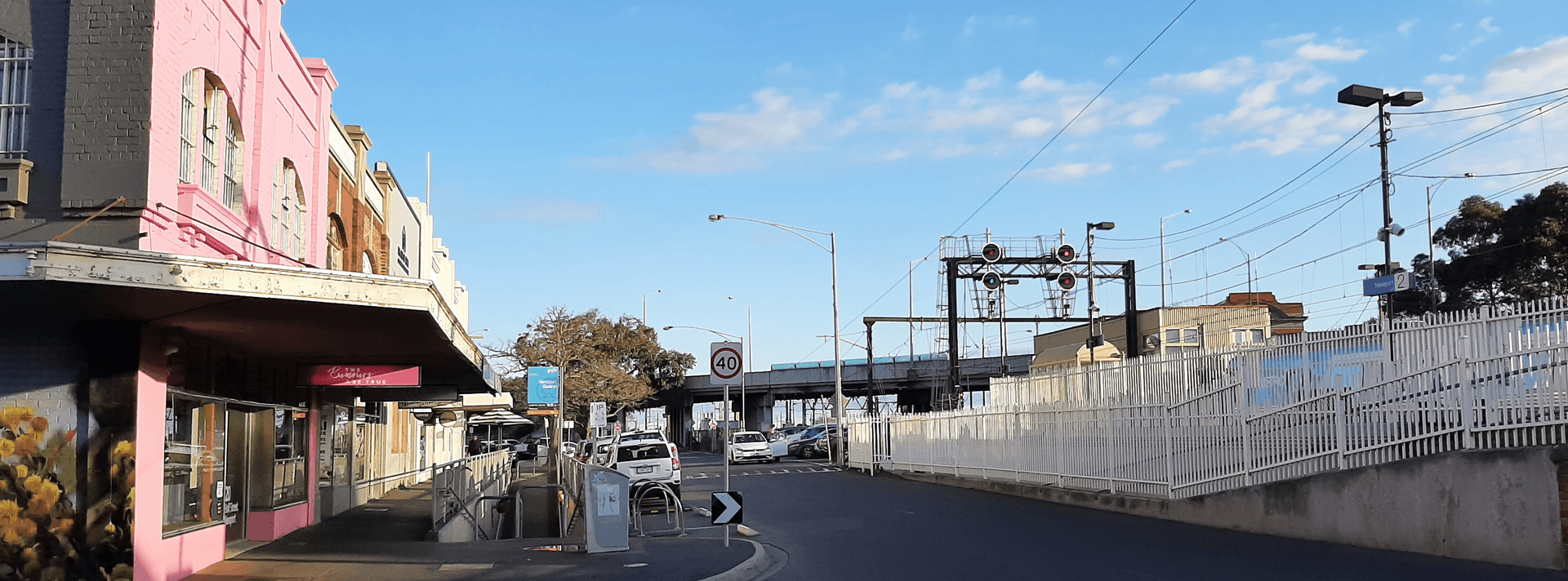
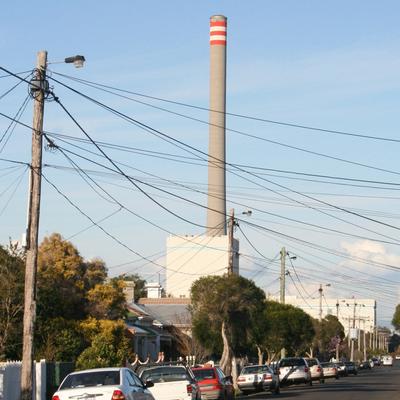
Newport sits 7.5 kilometres southwest of Melbourne's CBD, wedged between the West Gate Freeway, the Williamstown rail line, and the industrial remnants of a working-class past that's rapidly being overtaken by gentrification. This is a suburb built on bluestone quarries and railway workshops, where the 183-metre chimney of Newport Power Station still dominates the skyline and the Victorian Railways workshops once employed thousands. Drive down Mason Street or walk through the station precinct and you're navigating a landscape in transition, where heritage terrace houses stand alongside new townhouse developments, and the old mechanics' institute shares space with contemporary art galleries housed in decommissioned substations.
The 13,700 residents here reflect that shift. The predominant age group sits between 40 and 49, but young families with children aged 0 to 9 now make up a significant proportion of the population, a demographic bulge that arrived over the past decade as professionals priced out of Yarraville and Williamstown discovered Newport's combination of affordable entry and convenient transport. Couples with children account for 52.5 per cent of households, owner-occupiers sit at 69.5 per cent, and the median household income runs about 39 per cent above the national average. These are office workers commuting to the CBD, tradespeople working in the western industrial corridor, and creative professionals drawn by the arts scene centred around The Substation. The median house price hovers around 1.25 million dollars, placing Newport Melbourne below Williamstown but above the outer western suburbs, while units trade around 765,000 dollars.
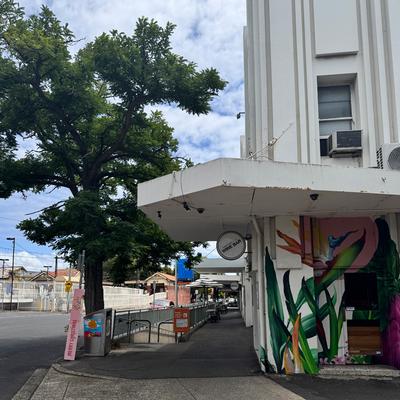
Daily life revolves around the twin commercial strips of Mason Street and Hall Street, divided by the railway line and connected by the Melbourne Road overpass. Mason Street hosts the main shopping precinct, a mix of Asian grocers, Italian restaurants, cafes attempting gentrification, and a hard core of older businesses that have resisted the suburb's upward drift. Hall Street offers a smaller cluster of eateries and services near the station. Residents talk about ducking down to Yarraville for coffee, heading to Williamstown for waterfront dining, or catching the train into the city for work and entertainment. Newport itself is not a destination suburb for outsiders, which is part of its appeal to locals who value the lack of weekend crowds. Weekend routines involve Newport Lakes, a 33-hectare bushland reserve created from a former bluestone quarry, offering walking trails, picnic areas, and off-leash dog zones. The park is Newport's standout natural asset, a remarkable piece of community activism that prevented the site becoming a rubbish tip in the 1980s.
Transport is Newport's strongest selling point. The station sits at the junction of the Werribee and Williamstown lines, delivering frequent services to Flinders Street in around 20 minutes and Southern Cross in 15. Trains run every 10 minutes during peak times, making car-free commuting genuinely viable. The West Gate Freeway is accessible within minutes via Melbourne Road, offering a 10 to 15-minute drive to the CBD during off-peak, though the freeway can become congested during morning and evening peaks. Bus routes service the suburb, including the 432 to Yarraville and the 471 to Sunshine. The Federation Trail, a 25-kilometre dedicated cycle track, runs north to Brooklyn and south towards Werribee, connecting Newport to the broader Bay Trail network. For cyclists and public transport users, Newport delivers genuine multimodal connectivity.
Green space extends beyond Newport Lakes to include Greenwich Reserve and The Strand, offering access to the Yarra River and views across to the city skyline. Mansions and modest apartments line The Strand, competing for uninterrupted bay views, while Greenwich Reserve provides a boat ramp, baseball field, picnic areas, and the Sandy Point Conservation Area. Paisley Park anchors the western edge of the suburb, hosting a swimming pool, gymnasium, golf course, soccer fields, bowling club, and miniature railway. For families, Newport offers 12 playgrounds within its 5.2 square kilometres, a density of recreational infrastructure that supports the influx of young children. The flat terrain makes cycling and walking easy, and the proximity to both parkland and waterfront provides outdoor options rare in inner suburbs.
Schools include Newport Gardens Primary School, Newport Lakes Primary School, Sacred Heart Catholic Primary School, and Bayside College for secondary education. Childcare is available through council-run kindergartens at Home Road and Newport Gardens Early Years Centre, though availability can be constrained by demand. Victoria University maintains a campus in Newport focused on automotive, metal fabrication, building, and electrical trades, reflecting the suburb's industrial heritage and ongoing connection to skilled trades. For families with school-aged children, the availability of local primary schools and a secondary college within walking or cycling distance is a practical advantage.
From an investment perspective, Newport presents a case study in gradual gentrification supported by transport access and proximity to the CBD. The suburb has moved from 78 per cent of Melbourne's median house price in 1987 to 96 per cent by 1996, and now sits comfortably above the metropolitan median. The shift from a working-class industrial base to a professional family suburb has been steady rather than explosive, driven by the same forces that transformed Yarraville and Seddon. Rental yields sit around 3 per cent for houses and 4.3 per cent for units, modest but stable. The appeal for investors lies in the transport infrastructure, the ongoing demographic shift towards younger families, and the potential for further capital growth as the gentrification wave continues westward from Yarraville. The industrial presence, while declining, still provides employment and rental demand from workers in the trades and logistics sectors.
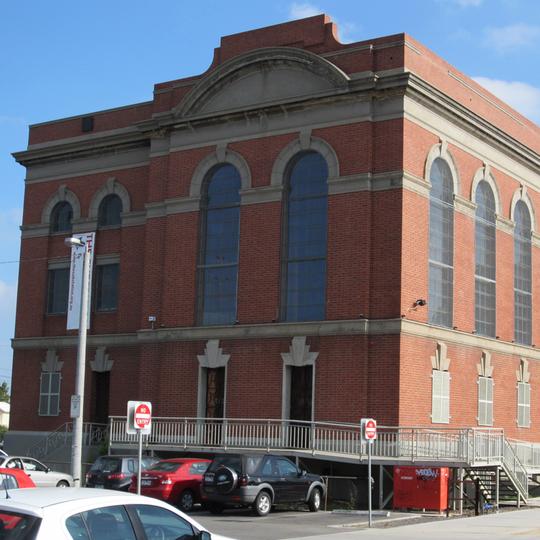
The cultural drawcard is The Substation, a contemporary arts centre housed in the restored Newport electrical substation built in 1915 to power Melbourne's electric trains. After decades of abandonment, local residents campaigned to restore the neoclassical brick building, which reopened in 2008 as a community arts centre and was repositioned in 2016 as a venue for experimental and contemporary art. The Substation now receives multi-year funding from the Australia Council and presents exhibitions, performances, and workshops that draw artists and audiences from across Melbourne's west. The annual Newport Folk Festival, the monthly artists' market, and the rotating gallery exhibitions give the suburb a cultural identity distinct from its industrial past.
The trade-offs are unavoidable and worth confronting. Newport's industrial legacy is not entirely historical. The power station still operates during peak loads, oil refineries and chemical plants occupy land north of the suburb, and heavy truck traffic rumbles along Melbourne Road and the West Gate Freeway. Residents report occasional industrial smells and the ambient noise of a suburb that sits at the intersection of freight routes and working port infrastructure. The shopping strips on Mason Street lack the polish and density of Yarraville or Williamstown, and despite repeated attempts at gentrification, street drinkers and rough edges persist around the railway station and Paine Reserve. The housing stock is older, often requiring renovation, and the suburb's identity remains split between the long-term residents who remember its working-class roots and the newcomers driving prices upward. But for buyers and investors willing to accept those realities in exchange for transport access, affordability relative to neighbouring suburbs, and proximity to parkland and waterfront, Newport Melbourne offers a functional, unpretentious inner-west lifestyle that doesn't rely on cafe culture or weekend crowds to justify its appeal.
The information provided is for general information purposes only and does not constitute legal, financial, or professional advice. While care has been taken to ensure accuracy, the information may not be complete, current, or applicable to your specific situation. You should always do your own research and, where appropriate, seek advice from a qualified professional before making any decisions based on this information.
Looking to buy property in Newport?
Let's talk about what you're looking for and how we can help. No obligation, no pressure, just an honest conversation about your property goals.
The Newport property market
Data from Q2 2025 · Victorian Property Sales Report
These charts show median property prices, sales activity, and investment metrics for Newport. The median price represents the middle value of all sales—half sold for more, half for less—giving a more accurate picture than averages, which can be skewed by unusually high or low sales.
Price History (2013-2024)
Annual median prices showing long-term capital growth trends. Use this to assess how the suburb has performed through different market cycles.
Investment Performance
CAGR (Compound Annual Growth Rate) shows average yearly growth accounting for compounding—a key metric for comparing investment returns.
Gross Rental Yields
Annual rent as a percentage of property price. Higher yields mean better cash flow; lower yields often indicate stronger capital growth potential.
Q2 2025 Sales Volume
Number of properties sold this quarter. Higher volumes indicate more market activity and reliable pricing data.
Recent Price Changes
Quarterly shows change from last quarter; Annual (YoY) compares to the same quarter last year, smoothing seasonal effects.
Data Sources: Property sales data from Victorian Property Sales Report (Department of Transport and Planning). Rental data from Homes Victoria Rental Report. All data licensed under Creative Commons Attribution 4.0.
Demographics of Newport
Based on 2021 Australian Census
Age Distribution
Housing Tenure
Income & Housing Costs
| Median Personal Income (weekly) | $1,241 |
| Median Family Income (weekly) | $3,268 |
| Median Rent (weekly) | $471 |
| Median Mortgage (monthly) | $2,507 |
Top Occupations
Transport to Work
Languages Spoken at Home
| English only | 79.2% |
| Greek | 2.4% |
| Arabic | 2.4% |
| Italian | 1.5% |
| Macedonian | 1.3% |
| Spanish | 0.9% |
Country of Birth
| Australia | 74% |
| England | 3.7% |
| New Zealand | 2.4% |
| India | 1.1% |
| Greece | 1% |
| Lebanon | 1% |
Dwellings
| Total Dwellings | 5,548 |
| Occupied Dwellings | 4,960 |
| Unoccupied Dwellings | 431 |
Data Source: Australian Bureau of Statistics, 2021 Census of Population and Housing. View full census data →
Schools in Newport
5 schools found
| School Name | Type | Sector | Year Range | ICSEA | Enrolments |
|---|---|---|---|---|---|
| Newport Gardens Primary School | Primary | Government | Prep-6 | 1097 | 544 |
| Newport Lakes Primary School | Primary | Government | Prep-6 | 1123 | 548 |
| Sacred Heart School | Primary | Catholic | Prep-6 | 1128 | 295 |
| Australian Islamic Centre College | Primary | Independent | Prep-4 | 1051 | 56 |
| Westbourne Grammar School | Independent | Prep-4 | N/A | N/A |
Data Source: Australian Curriculum, Assessment and Reporting Authority (ACARA), MySchool data. ICSEA (Index of Community Socio-Educational Advantage) represents the relative socio-educational advantage of students. The average ICSEA score is 1000.
Places of interest in Newport
- Newport Railway Museum (largest Victorian Railways collection)
- Newport Lakes (former bluestone quarries)
- Hobsons Bay Coastal Trail
- Newport Beach
- W.G. Gray Reserve
- Power Street Reserve
- Ralph Willis Park
- Local Shopping Precinct
Nearby attractions
- Altona Beach and Coastal Trail
- Newport Railway Museum (largest Victorian Railways collection)
- Scienceworks Museum (interactive science museum and planetarium)
- Williamstown Waterfront (maritime heritage, museums, dining)
- Hobsons Bay Coastal Trail (walking and cycling)
Buyers agent Newport VIC3015
How long does it take to buy a property in Newport with a buyers agent?
The property buying process in Newport typically takes 6-12 weeks from initial consultation to settlement. This includes property search, inspections, due diligence, negotiation, and conveyancing. We work at your pace and ensure you're comfortable with every decision, though we can move quickly when the right property appears.
How do you find properties in Newport before they're listed publicly?
Our relationships with real estate agents, industry contacts, and local networks in Newport give us early access to properties before they hit the market. We actively search for off-market opportunities that match your criteria, giving you less competition and often better negotiating leverage than publicly advertised properties.
Do you work with property investors looking to buy in Newport?
Yes, we work extensively with property investors in Newport. We analyse investment metrics including rental yields, capital growth potential, tenant demographics, and maintenance considerations. Our approach is data-driven and focuses on properties that will perform well financially, not just those that look appealing emotionally.
What happens if a property in Newport has issues found during inspection?
If inspections reveal problems with a property in Newport, we help you decide whether to negotiate a price reduction, request repairs, or walk away. We assess how significant the issues are, what they'll cost to fix, and whether they affect the property's value. Our goal is protecting you from properties with serious defects or excessive maintenance requirements.
How do you assess whether a property in Newport is overpriced?
We analyse recent comparable sales, assess the property's condition and features, understand current market dynamics, and apply our local knowledge of Newport values. This comprehensive approach tells us what a property is actually worth versus what sellers are asking. We ensure you don't overpay in competitive markets or for properties with limited appeal.